Guide
Cacao varieties: Criollo, Nacional and rare white cacaos
Where Criollo, Nacional, Chuncho and rare white cacaos like Porcelana and Piura Blanco grow, which countries produce fine cacao, and how they differ.
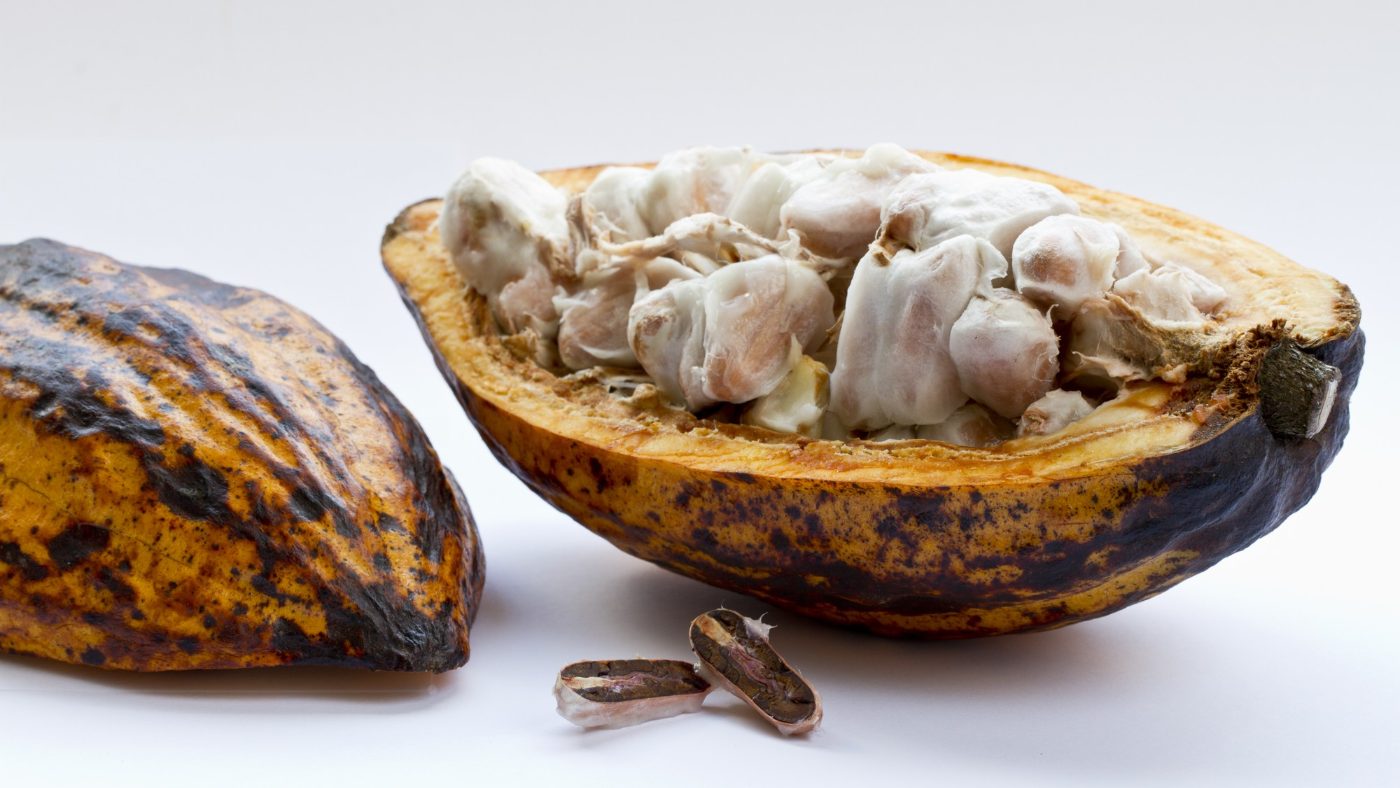
Ten families of cacao, and counting
For a long time cacao was sorted into three types: Criollo, Forastero and their hybrid Trinitario. Genetic research has shown that the real picture is richer. A 2008 study identified ten genetic groups: Amelonado, Contamana, Criollo, Curaray, Guiana, Iquitos, Marañón, Nacional, Nanay and Purús [1]. A Caquetá group from Colombia was added in 2022 [1], and in 2026 researchers described four more groups in Peru, two of them known locally as Chuncho [2].
Fine cacao is rare
Around 95% of the world's cocoa beans are bulk cocoa, mostly from Forastero-type trees [1]. The biggest producers are Côte d'Ivoire (about 1.89 million tonnes in 2024, roughly 36% of world supply), Indonesia, Ghana, Ecuador, Nigeria, Cameroon, Brazil and Peru [3].
The International Cocoa Organization (ICCO) recognises 23 countries as exporters of "fine or flavour" cocoa. These countries export 100% fine cocoa: Bolivia, Costa Rica, Dominica, Grenada, Madagascar, Mexico, Nicaragua, Saint Lucia, Trinidad and Tobago, and Venezuela. Colombia and Jamaica reach 95%, Papua New Guinea 90%, Ecuador and Peru 75%, and Belize, Guatemala, Honduras and Panama 50% [4].
Criollo: the most prized cacao
Criollo is traditionally the most prized cacao. It is believed to come from South America and spread to Mesoamerica, where the Spanish found it growing; the first Criollo trees planted in Venezuela came from Mexico and Guatemala [1]. Criollo is delicate and less resistant to disease, which is why many farms replaced it over the centuries [1].
Who produces the most Criollo? No official statistics count cacao by variety, so nobody can say exactly. What the sources do show is where Criollo is grown and valued: Venezuela, Mexico, Guatemala and the wider Central American region, and Peru. In Peru, the national agricultural university UNAS reported that 72% of the 2016 harvest was "criollo o fino", meaning native and fine cacao in the local sense rather than strictly the Criollo genetic group [5].
Trinitario was born when Venezuelan Criollo was crossed with Amelonado on Trinidad, first recorded in 1724. It is hardier than Criollo and better tasting than bulk cacao [1].
On our list: Patli (Criollo, Alta Verapaz, Guatemala), Ximena (single-bean Criollo, Tumaco, Colombia) and Ixmucane (Criollo, Guatemala).
Nacional and the Arriba aroma
Nacional is one of the ten genetic groups and Ecuador's native cacao. Modern Nacional is often a mix of ancestral Nacional with Criollo and Amelonado, and it is known for its floral character [1], famous as "Arriba". Ecuador was the world's fourth-largest cacao producer in 2024 with about 404,000 tonnes [3], and the ICCO counts 75% of its exports as fine cocoa [4].
On our list: Ecuador (Nacional, Manabí) and Cacao Laboratory (Arriba Nacional).
White cacaos: Porcelana and Piura Blanco
Some cacao trees have white or very pale beans instead of purple ones. They are among the rarest cacaos of all; white cacaos together make up roughly 0.1% of the world harvest [6].
Porcelana is a rare white-bean Venezuelan Criollo, named after its porcelain-white seeds. It is grown in a small region of Venezuela and in Colombia [7].
Piura Blanco comes from the dry forests of the Piura valley in northern Peru, near Chulucanas. It is known for citrus and fruity notes with less bitterness and acidity [8]. Sources differ on its family: Peruvian reports call it a white-hearted Criollo [8], while the chocolate maker that helped rediscover it places it in the Nacional group [6].
Chuncho and other native cacaos of Peru
Chuncho is the native cacao of La Convención in Cusco, growing along the Urubamba valley. It has its own genetic identity and is described as floral, fruity, herbal and nutty, with sweetness, low acidity and very low bitterness [9]. Peru also grows wild and native cacaos in the Amazon, and Bolivia, home of wild Beni cacao, exports only fine cacao [4].
On our list: Sumaq (Chuncho, Peru), Kawsay (Peru) and Beniano (wild cacao, Beni, Bolivia).
Find your favourite
Scores on Your Ceremonial Cacao Favorites come only from people who drink cacao. Taste one, then add your own score and a few words.
More guides
Sources
- Wikipedia: Types of cocoa beans (incl. Motamayor et al. 2008)
- Earth.com: Four new groups of indigenous cacao varieties discovered in Peru (PLOS One, 2026)
- Wikipedia: List of countries by cocoa production (FAO data, 2024)
- ICCO: Panel recognizes 23 countries as fine and flavour cocoa exporters (2016)
- Agraria.pe: 72% of Peru's cacao production is criollo or fine (2017)
- Original Beans: How a tiny white cacao bean changed lives in the Piura valley
- Bar & Cocoa: Porcelana
- Andina: National Geographic, white cacao is the jewel of Piura (2020)
- ICCO conference paper: Genetic diversity of native Chuncho cacao in La Convención, Cusco
Last checked 2026-11-02.